ANSYS HFSS · PyAEDT 1.6 · Open for Email Trial ANSYS HFSS · 全波仿真驱动 · 开放邮件试用

AI-Driven Antenna Design
for ANSYS HFSS
AI 驱动的 HFSS
天线设计与优化平台

Built for challenging antenna engineering: complex 3D parametric modeling, offline geometry checks before solving, hours-long autonomous optimization across multiple topologies, and live 3D & curve inspection in the browser. 面向高难度天线与微波器件研发:支持复杂三维参数化建模、求解前离线几何核验、跨多轮拓扑的长程自主优化,以及浏览器端实时 3D 模型与曲线监看。

13+ h
Continuous verified runs连续长程优化实证
24
Isolated HFSS Designs独立留存参数化模型
100%
Native full-wave FEM真实全波有限元求解
HFSS Full-Wave Models HFSS 全波模型实景
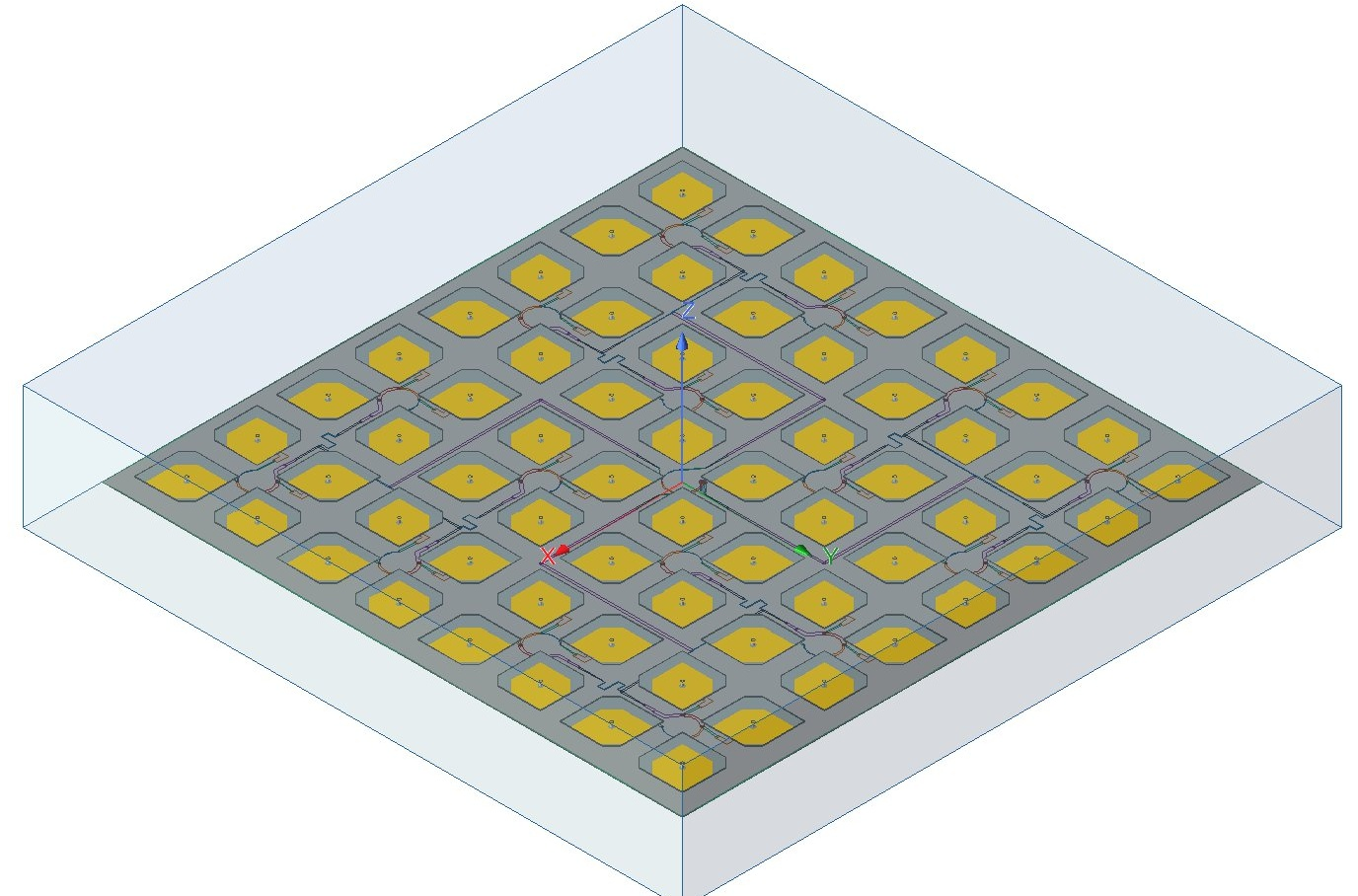
L-Band · 1.525–1.6605 GHz L-band 8x8 stamped-aluminum circularly polarized array in HFSS
VSWR (50 Ω)
1.18–1.31
LHCP Gain
23.72 dBic
Axial Ratio
0.20 dB
64 stamped Al patches · 885×885 mm · Type-N coax64 单元冲压铝片 + 双级顺序旋转馈网 · 885×885 mm
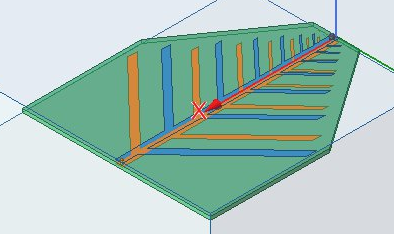
UWB · 1.0–4.2 GHz 1-4 GHz forward-swept V PCB log-periodic dipole array in HFSS
Worst S11
−10.01 dB
Pass Points
61 / 61
Topologies
F1 – F14
43.8° forward-swept V · 89.5×104.5 mm FR4 · 6.04 h run43.8° 前掠 V 形自相似结构 · 89.5×104.5 mm FR4
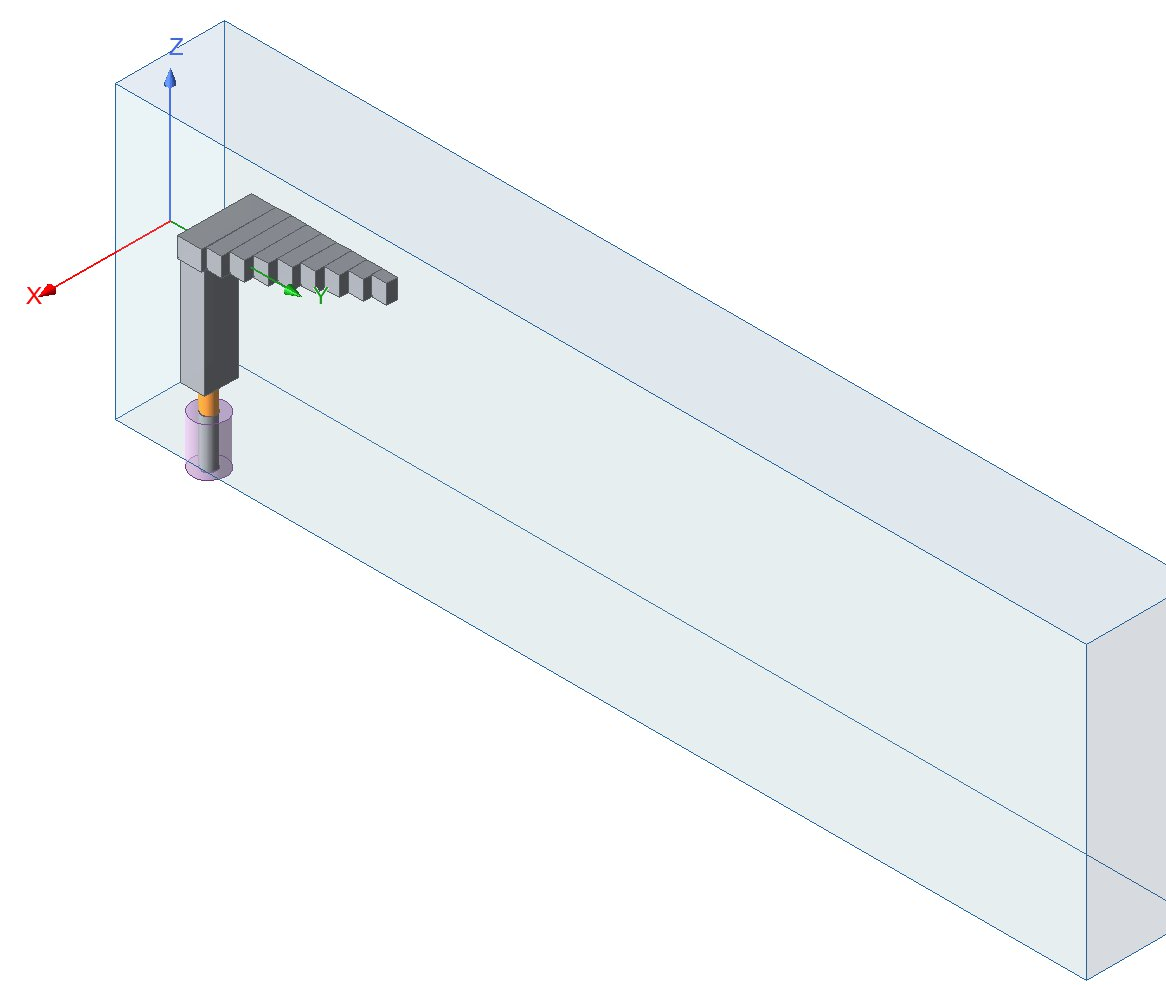
Ku-Band · 15–17 GHz Ku-band coaxial to WR-62 rectangular waveguide stepped-ridge transition
Worst S11
−16.77 dB
Insertion S21
≥ −0.09 dB
Tolerance
±0.05 mm ✓
Machinable 8-step ridge · WR-62 narrow-wall coax feed可整体加工 8 级阶梯脊 · WR-62 窄边同轴馈电

01 · Platform Overview01 · 平台介绍

An AI-driven HFSS simulation & design platform AI 驱动的 HFSS 仿真设计平台

HFSS-AI drives ANSYS HFSS underneath via official PyAEDT while adding the engineering scaffolding required for real antenna R&D: symbolic parametric design scripts, offline geometry inspection before launching the solver, non-destructive Design versioning per topology, and persistent task memory that survives hours of iteration. HFSS-AI 底层通过官方 PyAEDT 驱动 ANSYS HFSS,在上层补齐了真实天线研发最需要的工程机制:符号化参数建模、求解前离线审图、按拓扑独立留存 Design,以及能支撑数小时连续优化的持久化任务记忆。

Engineers describe targets, physical boundaries, and reference papers in a task. The AI plans topologies, writes parametric geometry, runs full-wave solves, analyzes S-parameters, input impedance, and far-field patterns, and pivots structure when a route hits a physical ceiling — while the Web Console keeps 3D models and curves live for human review at any moment. 工程师在任务里明确频段、指标、尺寸与工艺约束(也可附上参考论文),AI 负责拆解方案、编写参数化三维模型、执行全波仿真、结合 S 参数、输入阻抗与方向图做物理判断并在遇到瓶颈时切换拓扑;整个过程在网页端实时可见,人可以随时介入或手动试算。

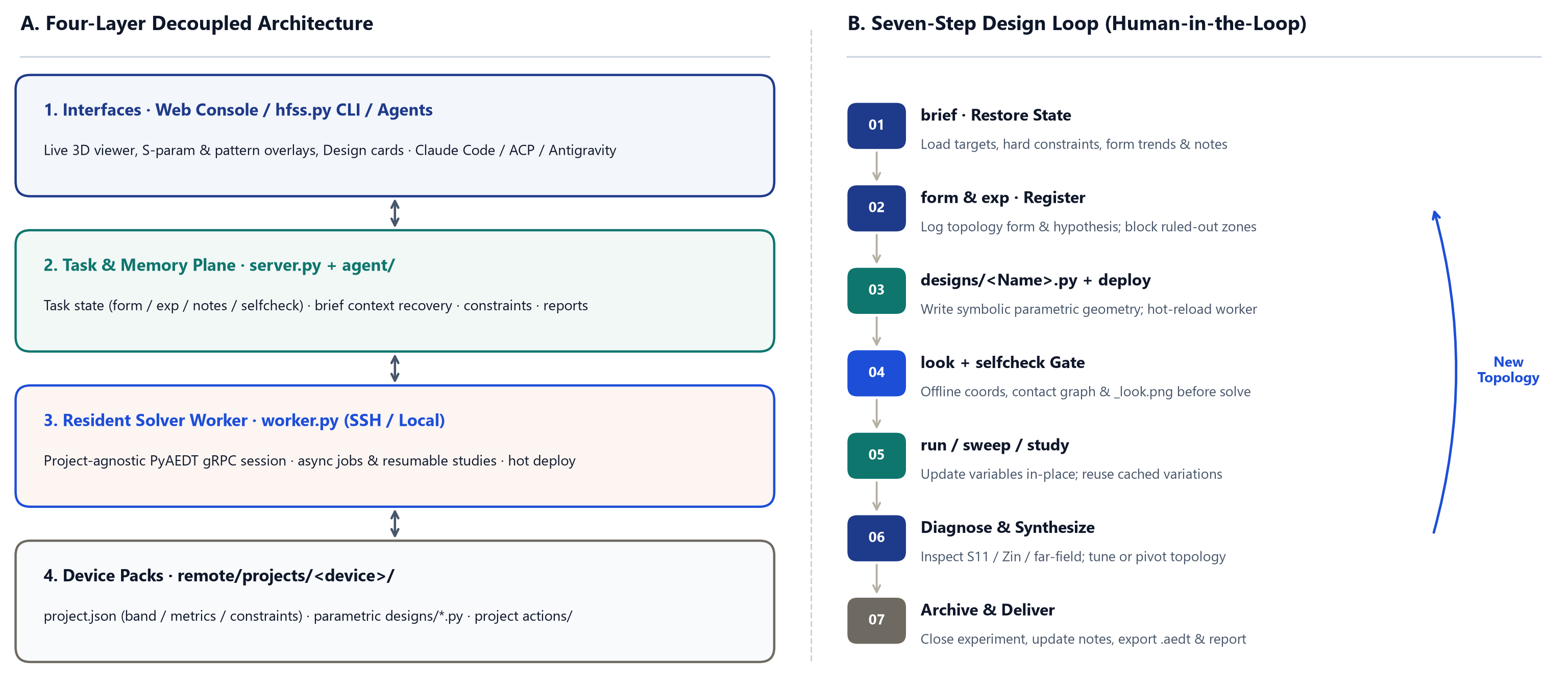
Four-Layer Decoupled Architecture 四层解耦系统架构

L1
Interfaces · Web Console & CLI人机入口层 · Web 控制台与 hfss.py Live 3D preview, curve overlays, per-topology cards, and a unified CLI for Antigravity, Claude Code, Codex, or DeepSeek Harness.浏览器实时看 3D 与曲线对比;外部 Agent(Antigravity、Claude Code、DeepSeek Harness 等)通过统一命令行接入。
L2
Task & Memory Plane · server.py + agent/本地任务与记忆层 · server.py + agent/ Disk-backed task state (form, exp, notes, selfcheck), hard constraints, feasibility ranking, and one-command brief context recovery.结构形式、实验假设、自检记录与笔记全部落盘,对话压缩后一条 brief 即可恢复完整现场。
L3
Resident Solver Worker · worker.py远端常驻执行层 · worker.py Runs on the AEDT workstation over SSH tunnel or locally on an isolated port & working .aedt, supporting async jobs, resumable studies, and hot reload.通过 SSH 隧道或本机直连驱动独立端口和专用工作 .aedt,不碰个人工程,支持异步排队、断点续跑和增量热重载。
L4
Device Packs · remote/projects/<device>/器件工程数据包 · remote/projects/ Adding a new antenna or waveguide only requires adding a folder (project.json + parametric designs/*.py), without changing the worker or UI.换新器件只需新增一个工程目录(声明频段、指标口径、约束与建模脚本),无需改写 Worker 或网页。

02 · Core Mechanisms02 · 核心工程机制

Six safeguards for reliable long-horizon HFSS design 支撑复杂建模与长程优化的六项机制

Every safeguard below addresses a concrete failure mode encountered in full-wave array, waveguide, and wideband PCB projects. 以下机制均在真实阵列、波导与宽带 PCB 天线仿真中沉淀而成,直接用代码硬约束,而不只靠口头提示词。

01 · LOOK & SELFCHECK

Offline pre-solve geometry gate求解前离线审图门禁

look evaluates symbolic geometry without starting AEDT — printing coordinates, part contacts, probe DC paths, and _look.png. New structures are blocked until selfcheck is recorded.不启 AEDT 即可毫秒级跑出零件坐标、接触关系、探针直流通路和 _look.png 三视图;新结构未写 selfcheck 禁止求解。

02 · PARAMETRIC

Single-source symbolic CAD单文件参数化建模

Each topology is a standalone designs/<Name>.py using symbolic expressions. The same file drives dry-run previews, Web 3D primitives, and native HFSS design variables.每个拓扑对应独立 designs/<Name>.py,尺寸全部写作符号表达式,同一份代码驱动离线预览、网页 3D 与 HFSS 原生变量。

03 · ISOLATION

Structural hashing & caching结构指纹与版本隔离

Dimension edits update variables in place and reuse cached variations. Topology edits bump <rev> and fork a new HFSS Design so prior models and curves are never overwritten.调尺寸只改变量并自动复用已算缓存;改拓扑自动递增指纹 <rev> 派生新 Design,历史模型与曲线原样保留。

04 · MEMORY

Disk-backed multi-hour memory长程外存记忆体系

Topology forms (form), hypotheses & conclusions (exp), ruled-out zones, and sensitivity trends live in files and reload cleanly via brief across 6+ hour runs.结构形式、实验假设与结论、已否决禁区和单变量趋势表全部落盘,支持 6 小时以上连续探索不丢上下文。

05 · CONTRACTS

Explicit metrics & feasibility显式口径与可行解约束

Unrenormalized ports (renormalize=False), explicit far-field cut rules, sourced hard constraints, and strict separation of feasible vs. out-of-bounds optima with SHA-256 artifacts.默认端口不归一化,显式声明切面与副瓣口径;排行榜严格区分约束内最佳与理论最佳,原始曲线带 SHA-256 归档。

06 · COLLABORATION

Live human-in-the-loop review双向人机实时协同

Watch live 3D geometry and overlaid S-parameters in the browser while the AI optimizes, or trigger manual parameter runs that feed straight back into the AI's next turn.优化全程可在浏览器查看 3D 模型、设计对象与曲线叠加;工程师手动点按钮试算的结果也会同步写进 AI 上下文。

Four-layer platform architecture and seven-step engineering loop Click to zoom点击放大
Four-layer decoupled architecture (left) and the seven-step closed engineering loop (right). 四层解耦平台架构(左)与七步自主研发闭环(右)。

03 · Full-Wave Case Studies03 · 典型项目全波仿真案例

Complex antenna & waveguide designs solved in HFSS 典型天线与微波器件全波仿真结果

All curves and models below were generated inside ANSYS AEDT 2026.1 via HFSS-AI with unrenormalized ports. Click any figure to inspect full resolution. 以下模型与曲线均通过本平台在 ANSYS AEDT 2026.1 中完成全波仿真(端口不归一化)。点击任意插图可全屏放大查看细节。

Case 01 · L-Band 8×8 LHCP Satellite Terminal Array (1.525–1.6605 GHz)案例一 · L 波段 8×8 左旋圆极化卫星终端阵列(1.525–1.6605 GHz)

Two-generation evolution (6.62 h, 91 remote HFSS jobs, 10 preserved Designs). Final Plan B combines 64 stamped 1.0 mm aluminum parasitic patches on M4 studs, a 6.5 mm air gap, a 1.0 mm domestic F4BM220 dual-level sequential-rotation proximity-coupled feed, and a rear IEC 61169-16 50 Ω Type-N air coax port. 两代方案演进(共 6.62 小时、91 次远端 HFSS 作业、保留 10 个独立参数化 Design)。终版方案 B 采用 64 块 1.0 mm 冲压铝寄生贴片(中心 M4 螺柱锁地)+ 6.5 mm 空气层 + 1.0 mm 国产 F4BM220 双级顺序旋转近场耦合馈网 + 背面标准 50 Ω N 型空气同轴接口。

ALL SPECS PASSED全指标达标
1.18–1.31
Full-band VSWR (spec ≤ 1.50)全带驻波比(指标 ≤ 1.50)
23.72 dBic
Center LHCP Gain (spec > 21)中心圆极化增益(指标 > 21)
0.20 dB
Center AR (0.10–1.15, 11/11 pass)中心轴比(全带 0.10–1.15 dB)
885 mm · 5.7 kg
Outline & est. mass (spec ≤ 6.2 kg)外廓与估算总重(≤ 6.2 kg)
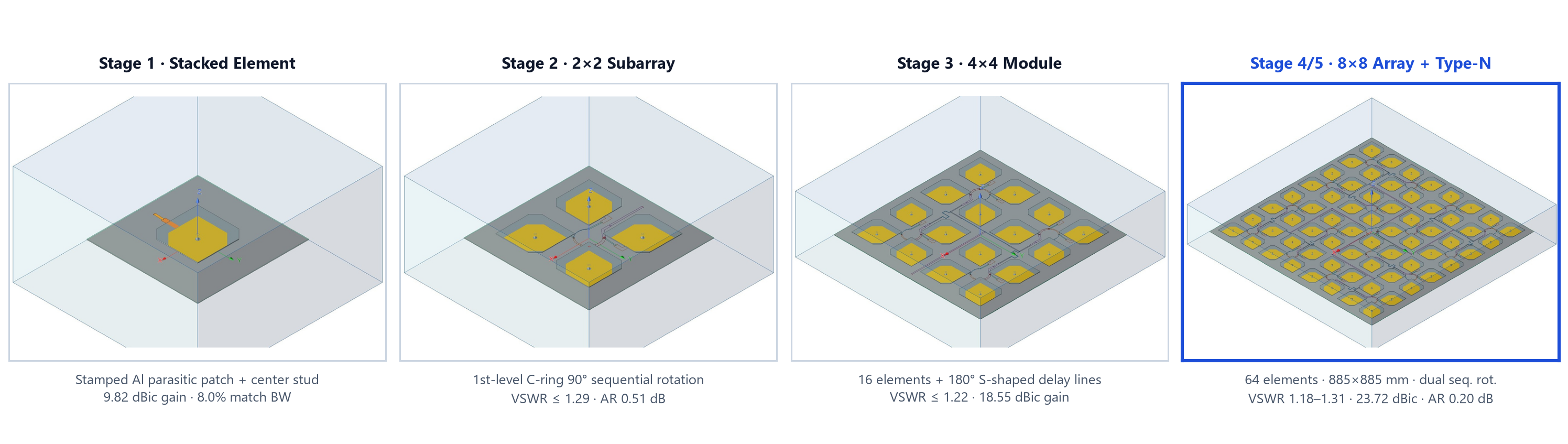
L-band 8x8 four-stage parametric build in HFSS Click to zoom点击放大
Four-stage parametric scaling in HFSS (Stacked element → 2×2 sequential-rotation subarray → 4×4 module with 180° S-delay lines → 64-element array with rear Type-N coax). Every stage remains intact in the same .aedt project. 方案 B 四阶段逐级建模(叠层单元 → 2×2 顺序旋转子阵 → 4×4 含 180° 延时线模块 → 8×8 含背面 N 型同轴整阵)。两代共 10 个独立 Design 全部保存在同一 .aedt 工程中。
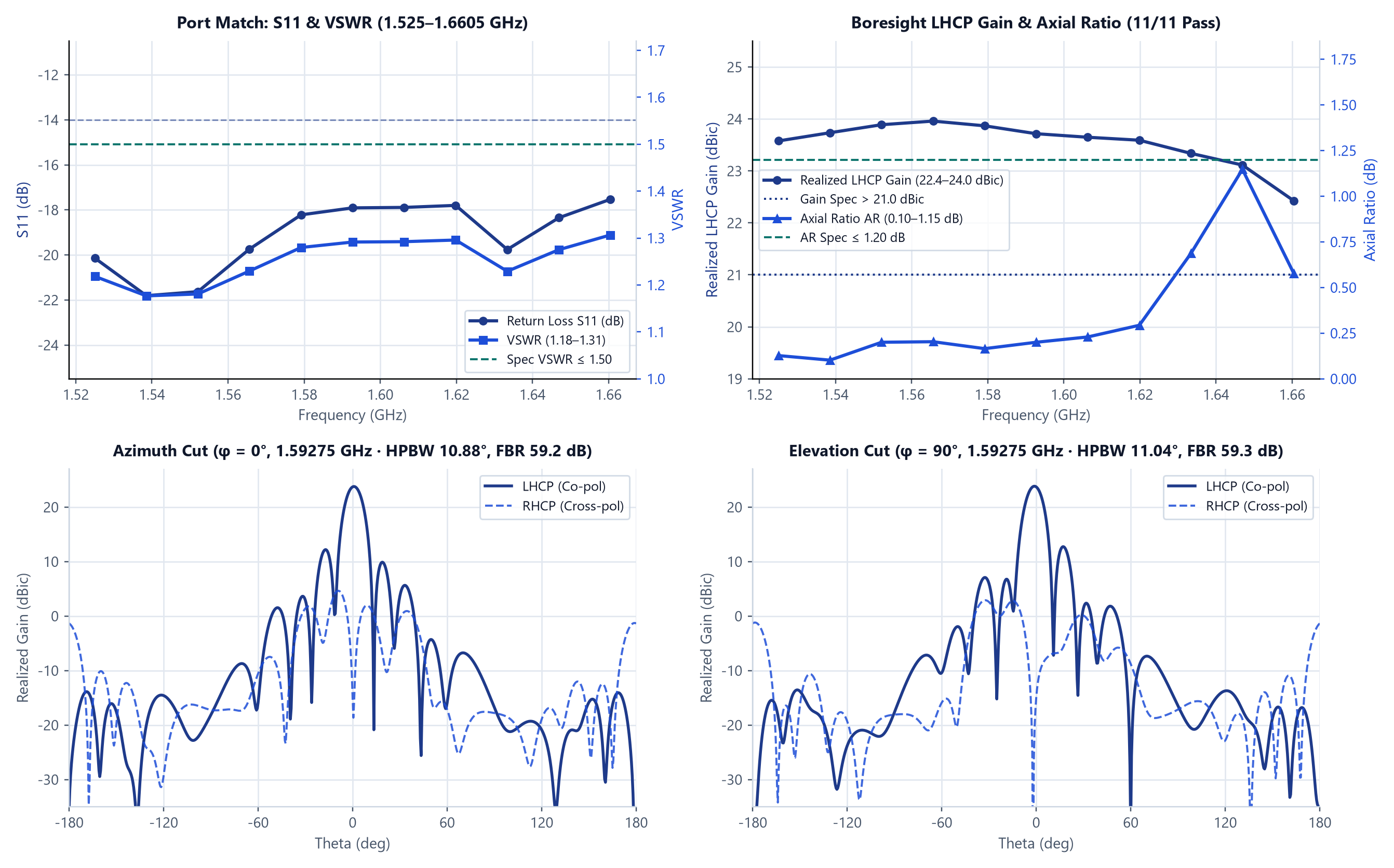
L-band 8x8 S11, VSWR, LHCP gain, axial ratio, and Az/El patterns Click to zoom点击放大
Full-wave simulation of the final coax-fed 8×8 array (15.4 min solve): S11 ≤ −17.53 dB (VSWR 1.18–1.31), realized LHCP gain 22.42–23.96 dBic, boresight AR ≤ 1.15 dB across 11/11 points, HPBW 10.88° × 11.04°, FBR 59.2 dB. 终版 8×8 整阵含背面 N 型同轴全波仿真结果(单次求解 15.4 分钟):全带 S11 ≤ −17.53 dB(VSWR 1.18–1.31),实现增益 22.42–23.96 dBic,11/11 频点轴比 ≤ 1.15 dB,波束宽度 10.88° × 11.04°,前后比 59.2 dB。

Case 02 · Ultra-Compact 1–4 GHz PCB Log-Periodic Antenna (≤ 90 × 105 mm)案例二 · 1–4 GHz 极小型化 PCB 对数周期天线(≤ 90 × 105 mm)

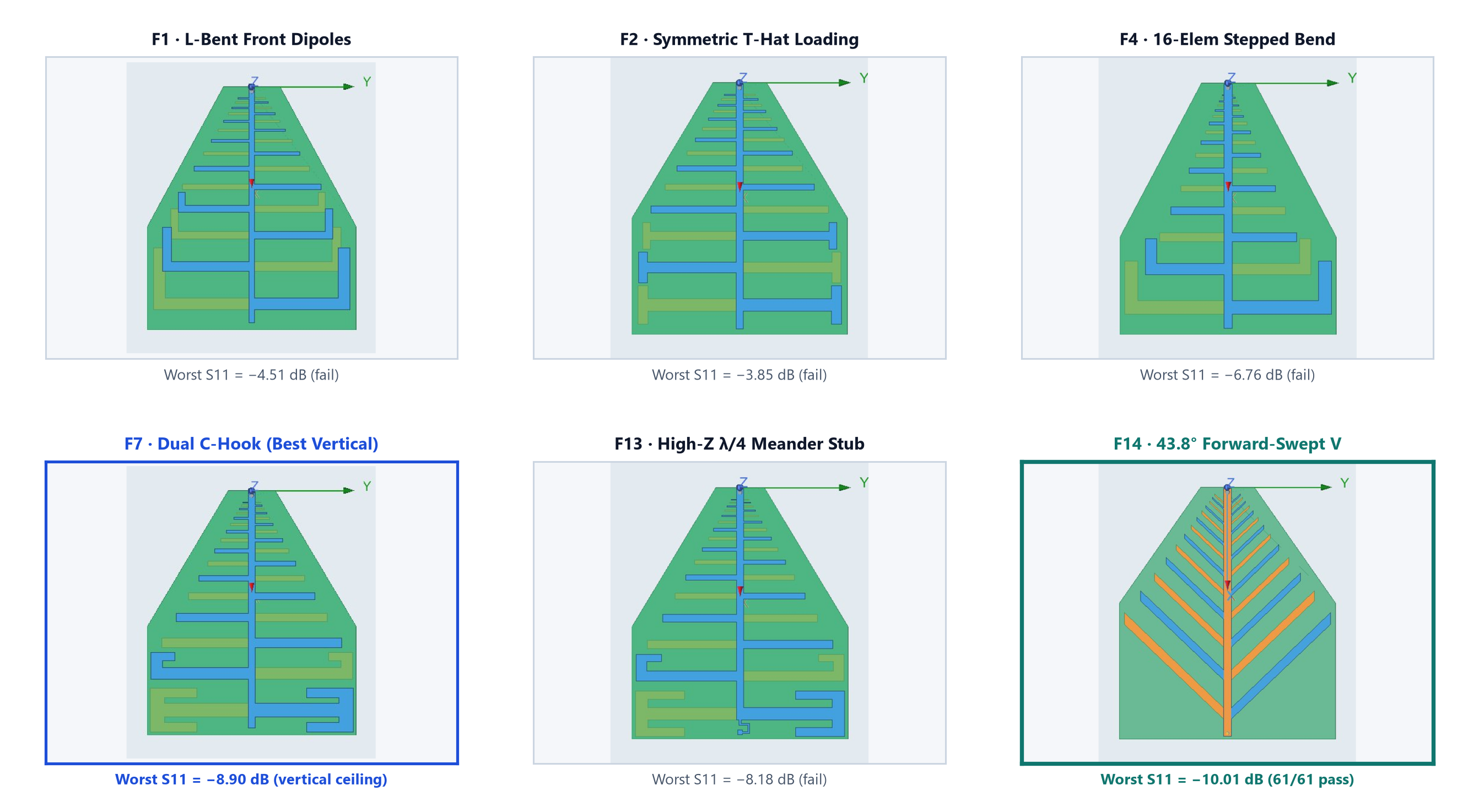
4:1 bandwidth on 1.6 mm FR4 with >27% width compression. Over 6.47 h (including a 6.04 h unattended continuous run), the platform systematically mapped the −8.90 dB ceiling across 13 vertical topologies (F1–F13), then achieved full-band compliance with a 43.8° forward-swept V self-similar geometry (F14). 双面 1.6 mm FR4 上实现 4:1 超宽带,90 mm 限宽将 1.0 GHz 振子压缩超过 27%。总耗时 6.47 小时(含单次 6.04 小时连续无人值守探索),依次通过 13 种传统垂直结构(F1–F13)摸清 −8.90 dB 物理极限后,采用 43.8° 全直臂前掠 V 形自相似构型(F14)实现全带达标。

61/61 POINTS PASS61/61 频点达标
−10.01 dB
Worst S11 (1.00–4.20 GHz)全带最差 S11(1.00–4.20 GHz)
6.04 h
Unattended autonomous loop单次无人值守连续探索
14 Designs
F1–F14 preserved in .aedtF1–F14 全部原样留存
89.5×104.5
mm FR4 · 1.79–3.67 dBi gainmm 尺寸 · 端射增益无陷波
LPDA F1 to F14 topology comparison grid Click to zoom点击放大
Selected HFSS top views from the 14-topology search: F1–F13 established the −8.90 dB vertical limit (archived intact to produce the client limit report); F14 unfolded the first dipole arm to 59.33 mm inside the board width. 14 轮拓扑探索的代表性 HFSS 俯视图:F1–F13 锁定了传统垂直结构 −8.90 dB 物理极限(模型未覆盖,直接批量导出了给客户的极限论证报告);F14 前掠 V 形在限宽内展开 59.33 mm 纯直臂。
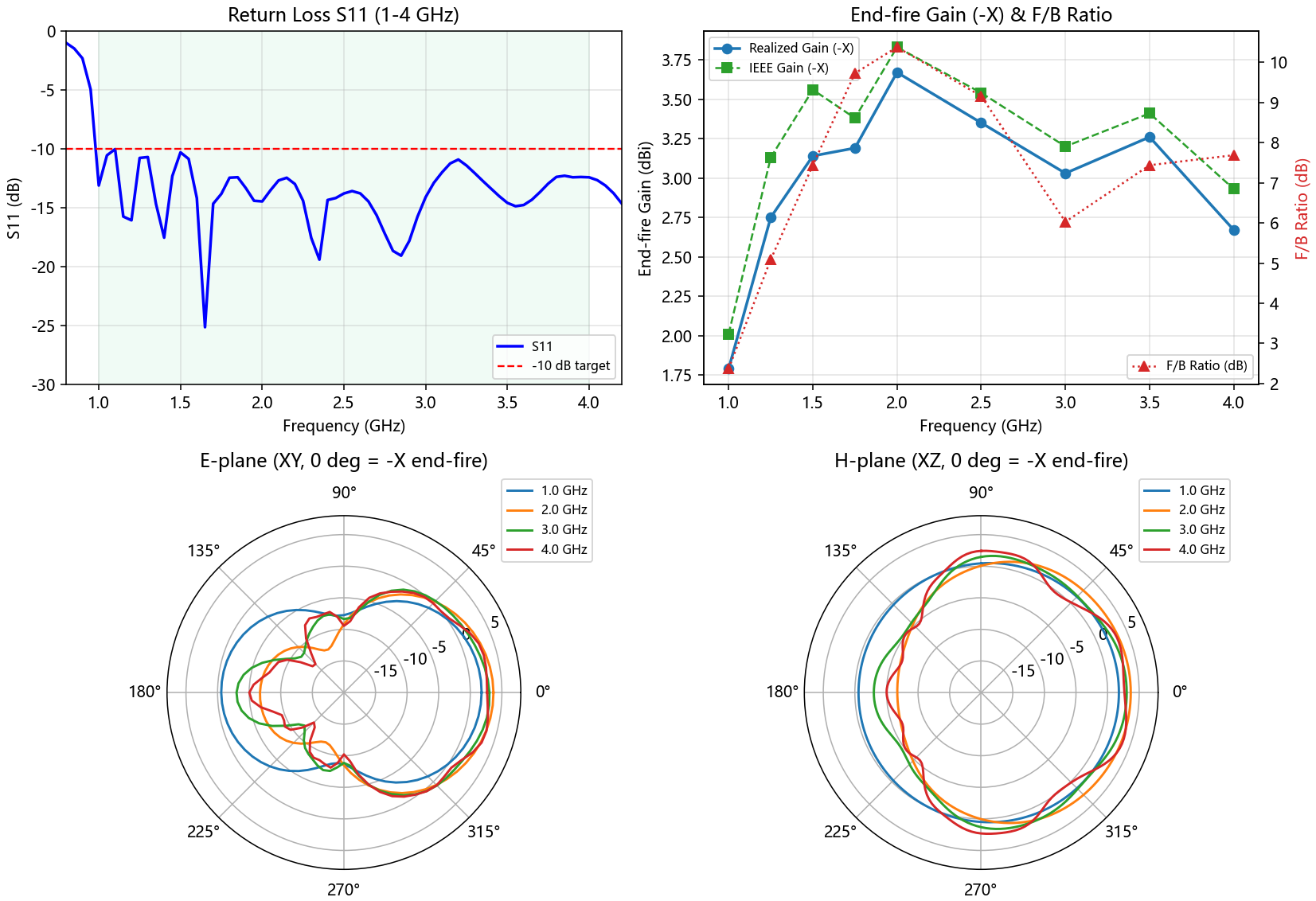
LPDA F14 full-band S11, end-fire gain, F/B ratio, and E/H patterns Click to zoom点击放大
F14 under multi-frequency adaptive meshing (1/2/4 GHz) and 61-point sweep: 100% pass across 1.00–4.20 GHz (VSWR ≤ 1.92), smooth end-fire gain 1.79–3.67 dBi, F/B up to 10.4 dB, clean E/H patterns. F14 在 1/2/4 GHz 多频自适应网格与 61 频点精扫下的全波仿真结果:1.00–4.20 GHz 全带 S11 ≤ −10.01 dB,端射增益 1.79–3.67 dBi,前后比最高 10.4 dB。

Case 03 · Ku-Band Coax-to-WR-62 Transition案例三 · Ku 波段同轴-矩形波导转换

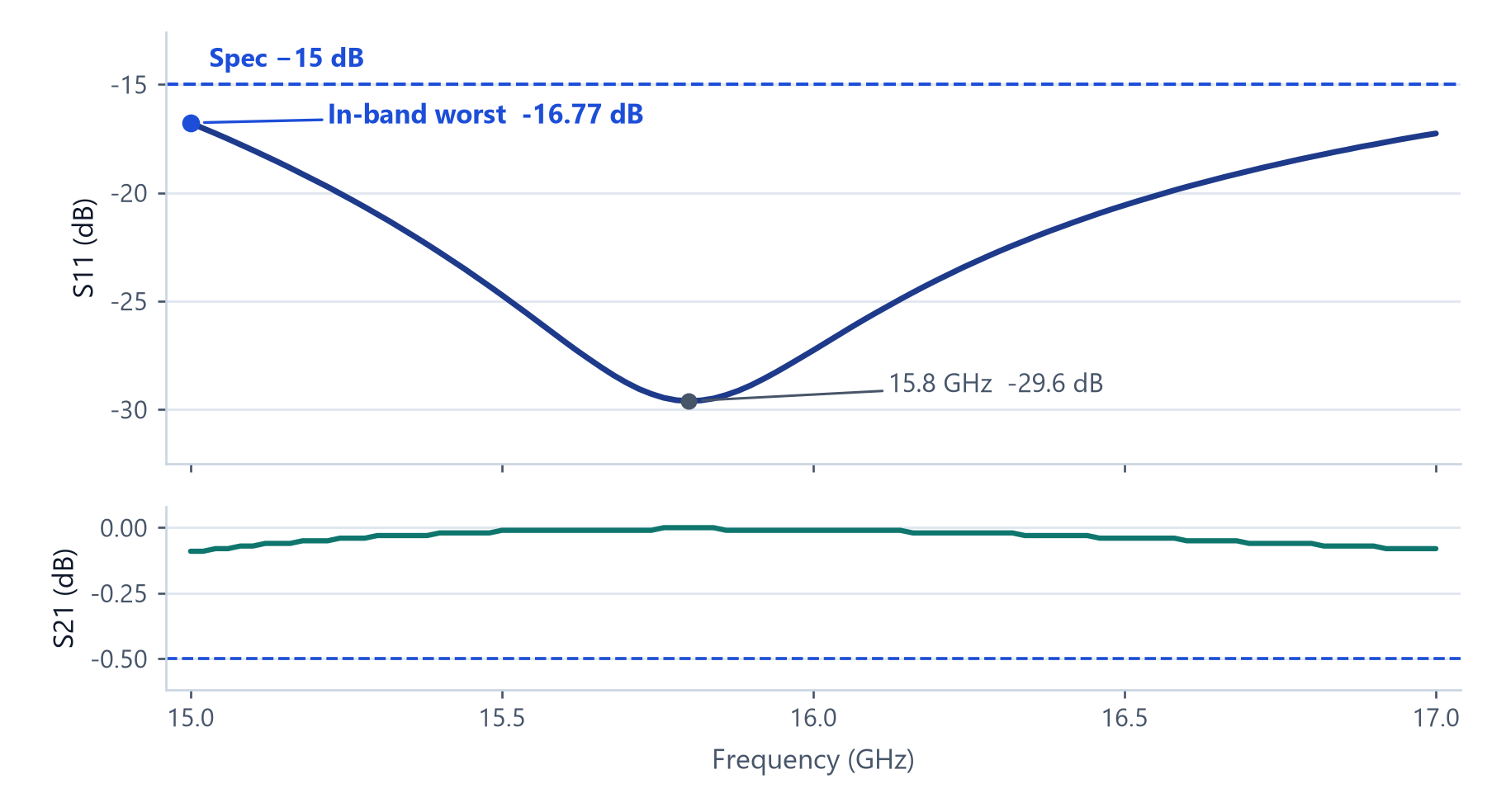
15–17 GHz · Improved worst S11 from −12.53 dB to −16.77 dB (VSWR ≤ 1.34, S21 ≥ −0.09 dB) using a single-piece machinable stepped ridge; passed ±0.05 mm single-var & ±0.02 mm combined tolerance checks.15–17 GHz · 最差 S11 由 −12.53 dB 优化至 −16.77 dB(VSWR ≤ 1.34,插损 ≤ 0.09 dB),单件可机加工阶梯脊;±0.05 mm 单变量与 ±0.02 mm 组合公差复核通过。

DELIVERED已交付
Ku-band transition S11 and S21 Zoom放大

Case 04 · Dual-Pol Folded-Waveguide Slot Array案例四 · 双极化折叠波导缝隙阵

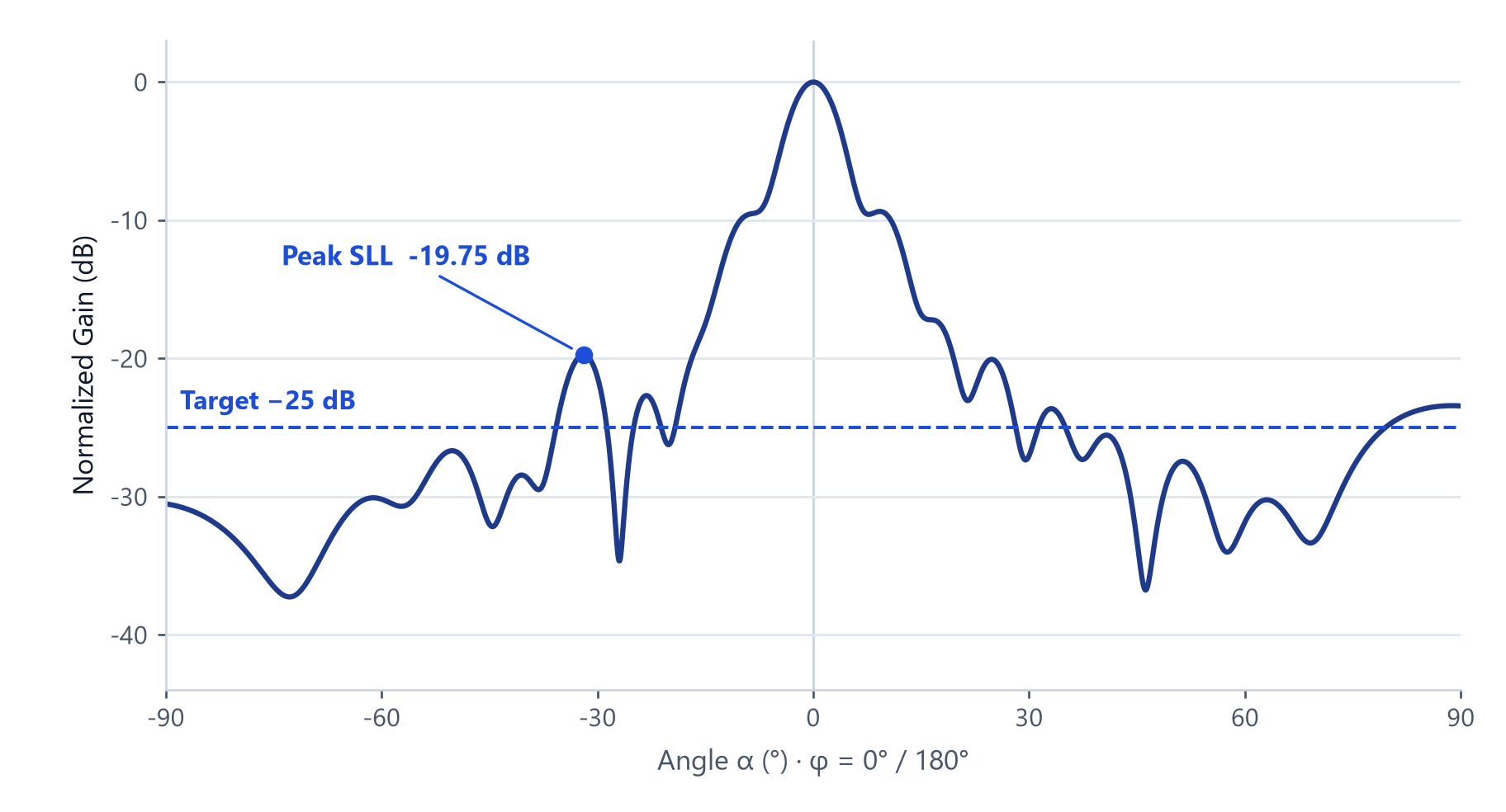
16.8 GHz · Target −25 dB sidelobe, currently −19.75 dB. Pattern extraction, explicit SLL definitions, and batch studies are working; the remaining 5.25 dB requires further structural optimization.16.8 GHz · 副瓣目标 −25 dB,当前 −19.75 dB。方向图提取、显式副瓣口径与批量 Study 已跑通,剩余 5.25 dB 差距正结合结构调整持续优化。

IN PROGRESS优化中
Folded waveguide slot array normalized pattern Zoom放大

04 · Web Console & Driving Modes04 · 网页控制台与驱动方式

Inspect 3D models & curves live — drive from any AI client 网页端实时监看模型与曲线,多端 AI 自由驱动

Switch views below to inspect the live browser console (click any capture to zoom full resolution), and choose the AI entry point that fits your workflow. 切换下方标签查看控制台各页面截图(点击任意截图可全屏放大看清细节,界面目前为中文)。底层任务与结果统一沉淀,上层支持四种驱动方式。

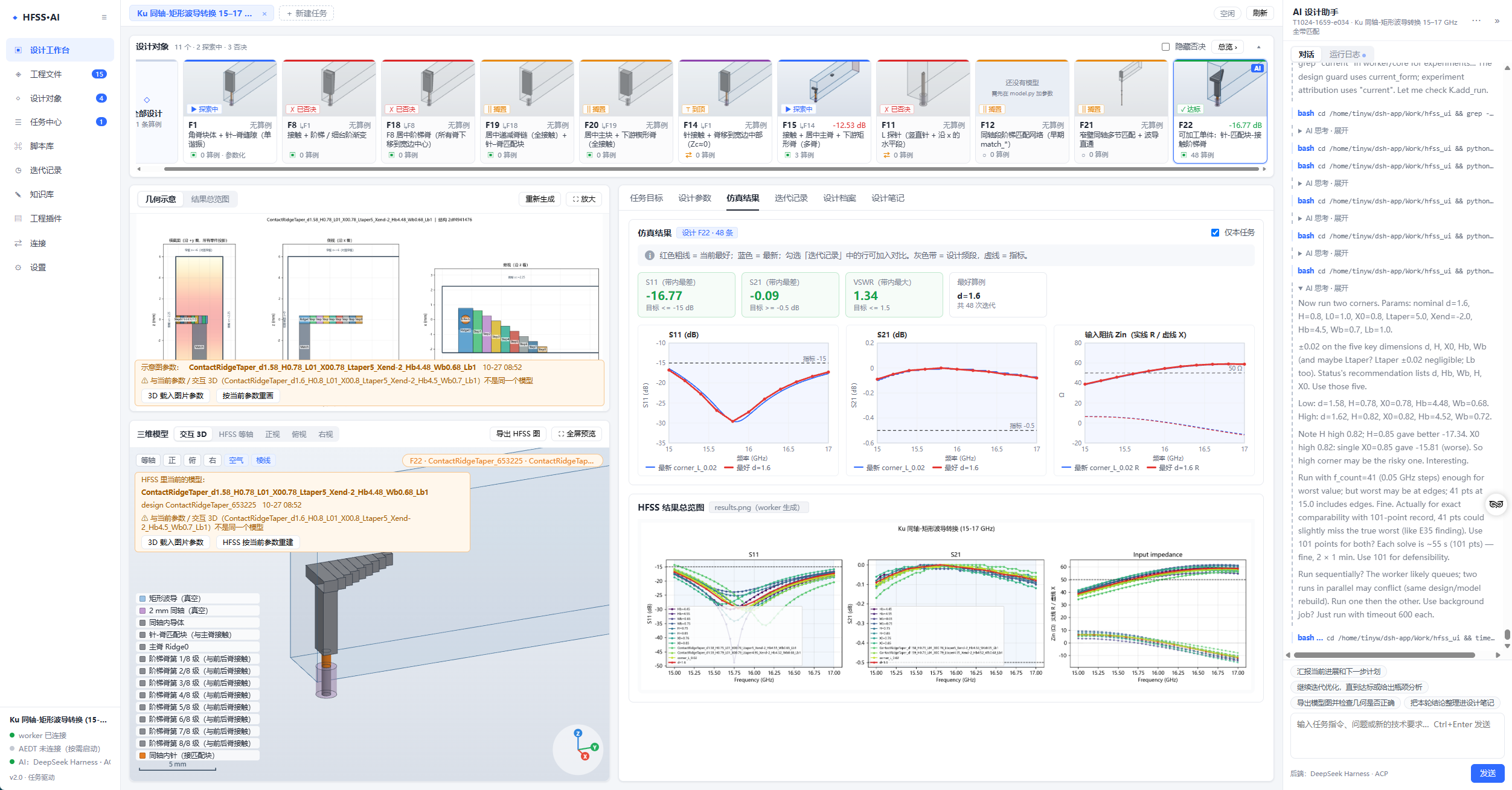
HFSS-AI Web Workbench Click to inspect full resolution点击查看高清大图
Design Workbench: topology cards across the top, schematic & interactive 3D viewport on the left, live S-parameter overlays and spec margins in the center, and the agent's reasoning/command log on the right. 设计工作台:顶部按结构排开设计卡片,左侧实时查看示意图与交互式 3D 模型,中间对比 S 参数曲线和指标余量,右侧同步展示 AI 推理与命令执行记录。
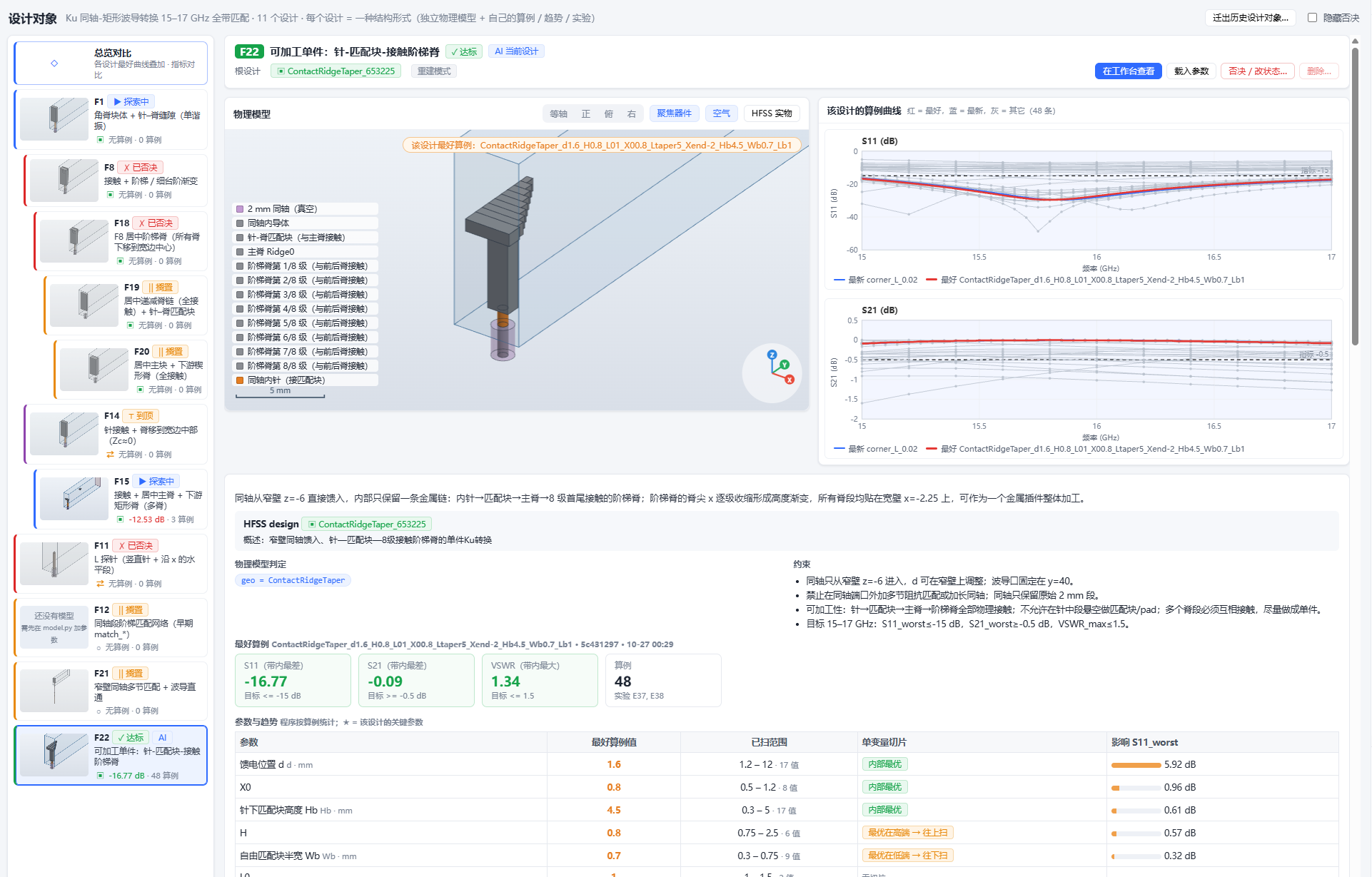
Design Object Center in HFSS-AI Click to inspect full resolution点击查看高清大图
Design Object Center: each candidate topology keeps its own 3D model, all overlaid runs, hard constraints, and an auto-computed single-variable sensitivity table. 设计对象页:每个候选拓扑独立归档,集中展示自己的 3D 模型、全部算例曲线叠加、硬约束条件以及程序自动统计的参数敏感度趋势表。
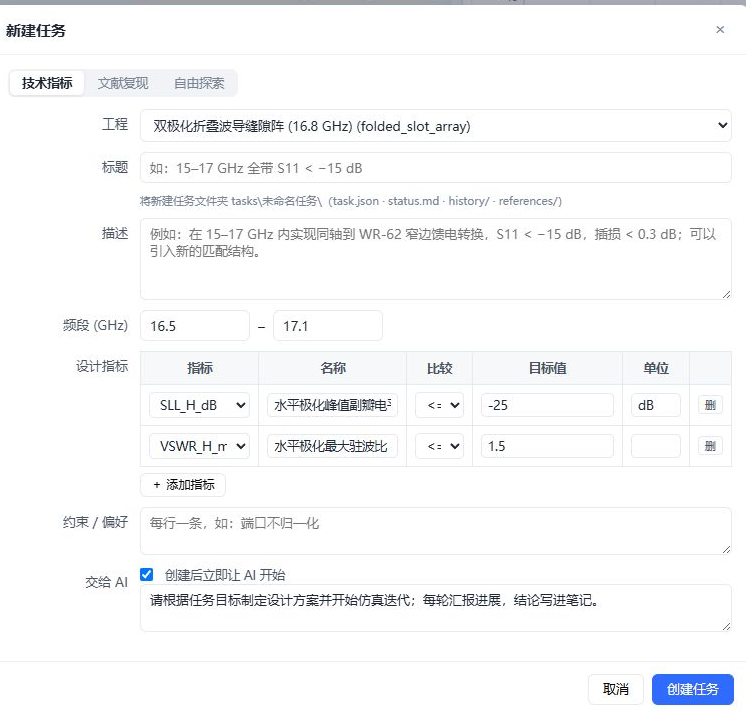
Structured New Task Dialog Click to inspect full resolution点击查看高清大图
Structured Task Creation: pick task type (Spec / Paper Reproduction / Exploration), enter frequency band, metrics, hard constraints, and attach PDF references before handing off to the AI. 新建任务:选择任务类型(技术指标 / 文献复现 / 自由探索),填写频段、设计指标与约束偏好,上传参考 PDF 后直接交由 AI 规划执行。

1. External AI IDE / Agent1. 外部 AI IDE / Agent

Antigravity, Claude Code, Codex, etc. edit designs/*.py, read PDFs, run analytical synthesis, and drive HFSS via hfss.py.Antigravity、Claude Code 等直接读写建模脚本、查阅论文、结合解析综合并通过 hfss.py 驱动远端求解,最适合复杂新结构。

2. Built-in Web Chat2. 网页内嵌对话

Chat directly inside the console backed by DeepSeek Harness ACP, Claude Code CLI, or Anthropic/OpenAI-compatible APIs & Ollama.浏览器右侧直接对话调参,后台接 DeepSeek Harness ACP、Claude Code CLI 或兼容 API / 本地 Ollama,零命令行门槛。

3. Harness Sidebar Plugin3. Harness 宿主插件

Embed HFSS-AI in DeepSeek Harness Web via dsh-plugin using structured tools (hfss_context, hfss_cli).通过 dsh-plugin 嵌入 DeepSeek Harness 网页侧栏,以结构化工具读取状态和触发仿真,日志规整可审计。

4. Manual + AI Hybrid4. 网页手动混跑

Adjust parameters or launch sweeps in the browser at any time — every manual run is logged into the same task timeline for the AI.工程师随时在网页手动改参试算,结果自动写入当前任务记录,AI 下一轮直接接着你的结果继续优化。

05 · Architecture Comparison05 · 方案对比

HFSS-AI vs. raw PyAEDT vs. generic HFSS MCP HFSS-AI 与原生 PyAEDT、通用 HFSS MCP 的区别

These sit at different layers: PyAEDT is the underlying solver SDK (which HFSS-AI calls directly), MCP is a transport protocol, and HFSS-AI is the stateful workflow and verification layer. 三者处于不同抽象层:PyAEDT 是底层求解器 SDK(HFSS-AI 底层直接调用官方 PyAEDT),MCP 是工具通信协议,而 HFSS-AI 负责任务状态管理、建模防错与人机协同。

Dimension对比项 Raw PyAEDT (LLM Scripts)原生 PyAEDT(AI 直写脚本) Generic HFSS MCP Server通用 HFSS MCP Server HFSS-AI PlatformHFSS-AI 平台
Modeling建模方式 Imperative scripts; agents rewrite and rebuild from scratch on edits容易写成一次性硬编码脚本,改尺寸就删模型重画 Dozens of atomic CAD calls; a 64-element array fragments context and burns tokens把画方块/端口拆成上百次 tool call,画大型阵列极易断链 One symbolic designs/*.py deployed once drives dry-run, Web 3D, and HFSS variables单文件符号参数化 designs/*.py 一次 deploy,驱动干跑、网页 3D 与 HFSS
Pre-solve check求解前核验 None — bad coords fail inside HFSS or waste solver time无预检,坐标出错往往等进 HFSS 报错或算完才发现 Forwards broken arguments directly to AEDT缺少领域检查,错误参数直接透传给求解器 Offline look (coords, contacts, DC path, _look.png) + mandatory selfcheck gate不启 AEDT 先 look 查坐标/接触/通路出图,未写 selfcheck 拒绝求解
3–6 h runs长程稳定性 Blocking shell; drops on disconnect or context compaction终端阻塞,断连丢现场,长对话压缩后容易失忆 15-min solves hit RPC/stdio timeouts; no persistent design memory单次 15 分钟求解易触发 RPC 超时,无跨轮工程记忆 Resident async worker, resumable studies, variation cache, disk-backed form/exp/brief远端常驻异步 Worker、Study 续跑、缓存复用、form/exp/brief 外存记忆
Multi-topology多方案留存 Manual folder copies; easy to overwrite prior runs手工拷贝文件夹,容易误覆盖历史方案 Flat tool responses without versioned design history缺少版本隔离和参数趋势汇总 One topology = one isolated <Name>_<rev> Design; all history stays audit-ready一拓扑一独立 <Name>_<rev> Design,历史模型与曲线原样可查
Collaboration人机协作 Black-box terminal; must grab remote AEDT GUI to inspect纯终端黑盒,看模型要抢占远程桌面 Text-only chat log仅限聊天窗口文字交互 Shared Web Console: live 3D, overlaid curves, bidirectional manual + AI run history共享网页控制台:实时 3D、曲线叠加、手动试算结果同步写进 AI 上下文

06 · Free Trial06 · 试用申请

Submit an antenna spec to try HFSS-AI 提交天线指标,申请一次免费试用

HFSS-AI is still in private development and not yet packaged for download. If you want to test it on a real antenna problem, email your specifications and reference papers — I will run the design loop through HFSS-AI and send back the full-wave simulation results. 平台目前仍在持续开发中,暂未公开安装包。如果你想看看它处理真实天线设计课题的实际效果,可以通过邮件提交天线指标与参考资料,我审核后用这套 HFSS-AI 平台完成仿真设计,再把结果回复给你。

  1. 01
    Send antenna specs & reference papers邮件发送指标需求与参考资料 Include frequency band, polarization, target S11/VSWR, gain, AR/SLL/HPBW, size and substrate constraints, plus any reference PDFs or sketches.写清频段、极化、S11/VSWR、增益、轴比或副瓣、外廓尺寸与板材约束;有参考论文 PDF、DOI 或草图可一并附上。
  2. 02
    Scope check & one-trial verification评估仿真规模并核对试用资格 I confirm the problem fits a single-trial compute budget and check the 1-trial-per-person quota before queuing the simulation.收到后会先确认课题规模是否在单次算力范围内,并核对每人限 1 次的试用资格,确认后安排运行。
  3. 03
    Receive HFSS views, curves & summary邮件获取模型图、仿真曲线与结论 Once finished, you receive the HFSS geometry views, full-wave S-parameter and pattern plots, and a concise design summary (please sanitize confidential projects first).完成后将 HFSS 模型视图、全波 S 参数与方向图曲线以及主要尺寸结论通过邮件发回(涉密项目请先做脱敏处理)。
One free trial per person: Because workstation solver capacity is limited, please email from a university or company address (.edu / corporate domain), or include one public profile link (GitHub, Google Scholar, ORCID, or LinkedIn) for verification. 每人限免费试用 1 次:由于工作站求解算力有限,请尽量使用高校或单位邮箱发送(如 .edu.cn / 企业域名),或在正文中附一个可公开核验的主页链接(GitHub、Google Scholar、ORCID 或 LinkedIn)。
To: woodybuendia@gmail.com
Subject: [HFSS-AI Trial] <Antenna Type & Band, e.g. 2.4 GHz Patch>

1. Applicant & Verification (1 trial / person):
   - Name / Affiliation:
   - Public profile (GitHub / Scholar / ORCID / LinkedIn):

2. Antenna Specifications:
   - Frequency band:
   - Polarization & port (e.g. 50 Ohm coax / microstrip):
   - Return loss / VSWR target:
   - Gain / AR / SLL / HPBW targets:

3. Physical & Process Constraints:
   - Max outline & profile (L × W × H mm):
   - Substrate (material, er, thickness):
   - Hard constraints (what must not change):

4. Reference Material (attach PDF or paste DOI / link):
   - 主题:[HFSS-AI 试用] <天线类型与频段,例如 5.8 GHz 微带阵>

1. 申请人信息(每人限免费试用 1 次):
   - 称呼 / 单位或学校:
   - 公开主页链接(GitHub / Google Scholar / ORCID / LinkedIn 任选其一,使用单位邮箱可不填):

2. 天线技术指标:
   - 工作频段:
   - 极化方式与馈电形式(如 50 Ω 同轴 / 微带 / 波导):
   - 回波损耗 S11 / 驻波比 VSWR 指标:
   - 增益 / 轴比 / 副瓣 / 波束宽度等要求:

3. 尺寸与工艺约束:
   - 外廓尺寸上限(长 × 宽 × 高 mm):
   - 基板材料、介电常数与厚度:
   - 硬性限制(哪些结构或边界不能动):

4. 参考资料(可附论文 PDF、草图,或贴 DOI / 链接):
   - 

07 · FAQ07 · 常见问题

Common questions 常见问题解答

Does it run real ANSYS HFSS or a surrogate model?底层是代理模型,还是真实 ANSYS HFSS?

It drives real ANSYS HFSS (AEDT 2026.1) via official PyAEDT. Every S-parameter and radiation pattern shown on this site comes directly from full-wave FEM simulation.底层通过官方 PyAEDT 驱动真实的 ANSYS HFSS(AEDT 2026.1)。页面中展示的所有 S 参数与方向图均由全波有限元直接计算得到,不使用黑盒拟合替代。

Why build a full platform instead of just an HFSS MCP?为什么不直接做一个 HFSS MCP?

Drawing a 64-element array through atomic MCP calls fragments context and breaks on 15-minute solves. HFSS-AI relies on declarative parametric Python files, offline geometry checks, and an async worker; MCP can sit on top as a thin adapter later if needed.用原子 MCP 工具逐步画 64 单元阵列极易断链且很占上下文,单次 15 分钟求解也常触发超时。把建模收敛为参数化文件、加上离线审图和常驻异步 Worker 才能稳定跑完长任务。

Which AI models and clients are supported?支持接入哪些 AI 模型和客户端?

Task state lives on disk, decoupled from the LLM. It supports external coding agents via hfss.py (Antigravity, Claude Code, Codex, DeepSeek Harness) as well as built-in Web Console backends (DeepSeek Harness ACP, Claude Code CLI, Anthropic/OpenAI-compatible APIs, local Ollama).任务状态与大模型解耦。既支持通过 hfss.py 接入 Antigravity、Claude Code、Codex、DeepSeek Harness,也支持在网页端使用 ACP 持久会话、Anthropic / OpenAI 兼容 API 或本地 Ollama。

Is the source code publicly released?目前是否开源或提供安装包?

Not yet — the platform is still actively evolving alongside complex array and wideband PCB projects. For now you can try it on a real antenna requirement via the email trial above, and follow the GitHub repo for future release updates.暂未公开源码与安装包,目前仍在结合真实阵列与宽带天线课题持续完善。现阶段欢迎通过上方邮件试用体验,后续发布计划会同步更新在 GitHub 仓库中。

Explore the 9-chapter technical handbook 阅读完整 9 章平台技术手册

Read the full breakdown of the four-layer stack, hfss.py commands, four driving modes, multi-hour antenna optimization traces, and development roadmap. 按章节查看四层架构、hfss.py 常用命令、四种驱动方式对比、两大复杂项目的完整优化复盘与当前开发路线。